inda dispatch #1: kharbuja
My first few days in Delhi have been defined by sleeping (trying to beat my jetlag) and eating (everything my mausi can feed me). I’m nearly on schedule now, and one of my daily outings usually includes going to the market with my mausi or my mausaji. The freshness and variety of the fruits and vegetables available along the street is overwhelming in the best way. I think I’ve eaten more fruit in the last five days than I did in the last month. I’m finally meeting one of the (old) food pyramid recommendations!
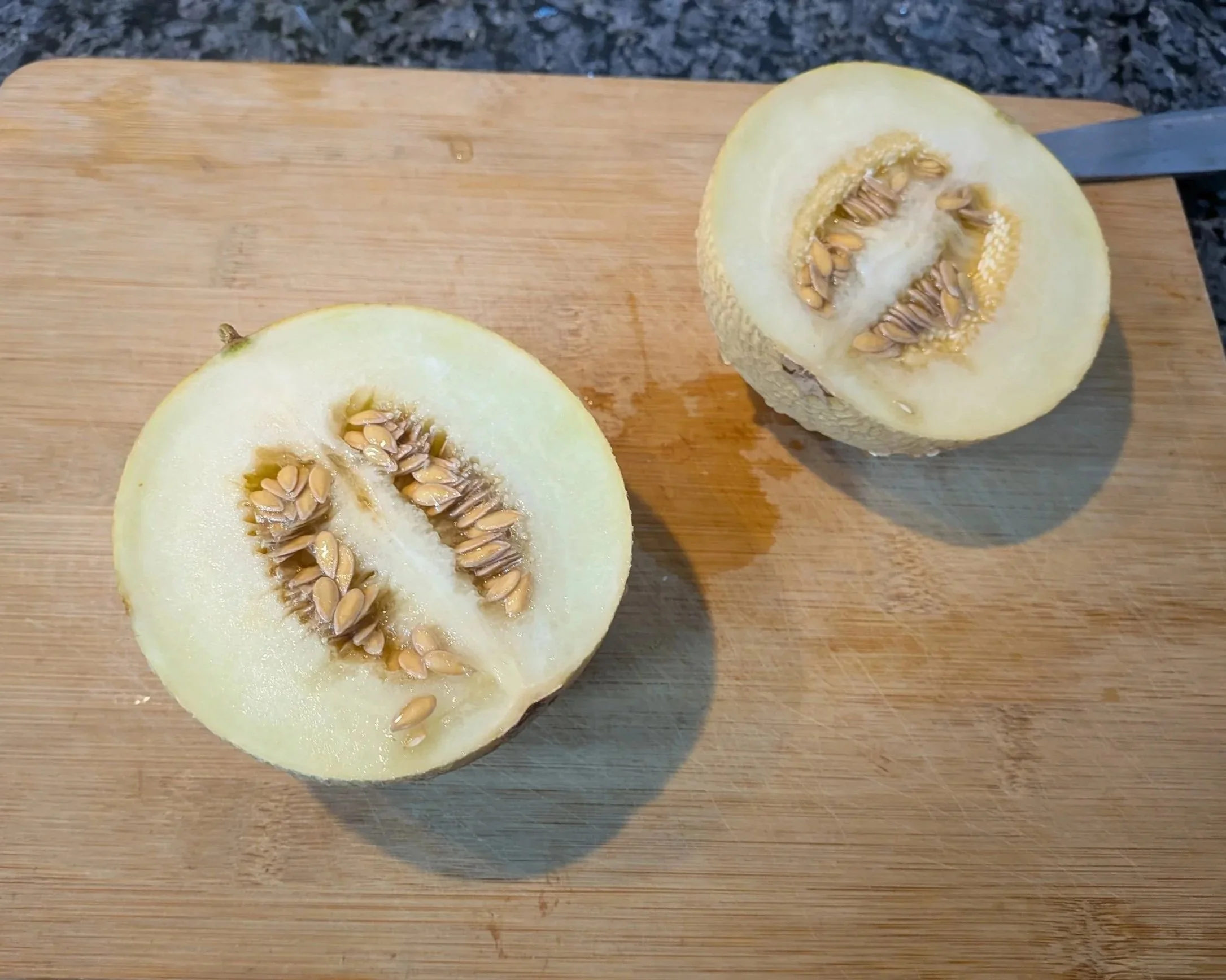
There are melons here that look like mini basketballs, fitting into the palm of my hand. Their insides come in all the colors of the Indian flag. I think of honeydew as one of the blandest fruits to get in the U.S., but the melon I cut open yesterday for breakfast was unbelievably sweet, the green flesh dripping with juice. I was pleasantly surprised, since the orange cantaloupe we’d sliced up the day before that had the barest tinge of sweetness. The vendor who had sold us the green melons guaranteed their sweetness, but my mausaji said the sad cantaloupe vendor had promised the same. Everyone has the same sales pitch regardless of the produce, so it’s a gamble every time.
There is a big weekly market that happens on Monday nights in the neighborhood. In all my trips here I’ve never been, probably because we’re always rushed during those quick visits. This is the kind of everyday thing I was hoping to experience when spending more time here. It reminded me a little of the farmer’s markets back home, although you can always find many people with fruit and vegetable carts here no matter what day it is. This evening, sellers were congregated across a set of street blocks, with no end in sight. Some vendors had fruit, other vegetables. Some only had one item while others had several. Produce was spread across sheets on the ground, or displayed on carts. Nearly everything is smaller here, from the heads of garlic to cauliflower to green cabbage to onions. I imagined how much easier it would be to shop for dinner for one if vegetables came in this size at home. Ironically, no one is cooking for one here.
There were Indian vegetables, like methi and karela and tori. Huge jackfruits were cut in half or quarters for display, which is easiest to find canned in the U.S. There were drumsticks, and thin green stems my mausi called the bachpan of drumsticks (literally, their childhood, the baby version - her little joke) further down. There was kakdi, which tastes to me like a mix between cucumber and celery. We saw thin, long kamalkakdi (lotus root), so different from the huge roots I see at the Japanese store. The Indian cucumbers are a little bitter to me, but they even had desi cucumbers, which my mausi said taste more like the ones we get in the U.S. Indian carrots are nearly red instead of the orange I’m used to. Radishes resemble carrots, except they are white. Nimbu is a small citrus like a lime, the only one locally available here, although we use that word interchangeably in the U.S. for lemons and limes. We asked about red leaves in a bunch at one of the stalls, which the vendor called laal saag (red spinach). There were carts with rasbharis, our gooseberries (the superheroes of the berry world with their little capes), though the ones here are bigger and slightly sweeter. The Hindi name sounds to my ear like raspberry said with an Indian accent. Actual raspberries were nowhere to be found, though we saw strawberries here and there.
There were mountains of podded peas at some stalls. Peas are my favorite, though sadly the end of pea season is approaching here. I have many fond memories of shelling peas outside in my grandmother’s backyard, a job that could be entrusted to our little hands. I spotted at least three different kinds of chilies: the tiny green ones that I forever associate with Indian food, long light green ones, and medium sized red ones that resembled Fresno chilies. There were big eggplants and baby ones and little fairytale eggplants, the last of which my mausi said are relatively new. The vendors use small weights on the scale with your produce to determine how much you’ve picked up; nothing is digitized here except for payment by QR code at some carts or stalls.
I could still see vendors all the way down the block that we hadn’t reached by the time we had two totefuls of produce. My mausi drove a hard bargain at every stall, including one of our last stops for white-fleshed melons called sharda that again came with a promise of sweetness. We had those with breakfast this morning; while they weren’t as juicy as the green melons, they were still delicious.
kharbuja: cantaloupe
mausi: mom’s sister
mausaji: mom’s sister’s husband
methi: fenugreek
karela: bitter gourd