It’s HOT. The Delhi of my childhood summers was sticky, since we came during the monsoon season (July and August). I’ve never experienced this dry heat, where it’s suffocating even after the sun goes down. The first week of the real heat, in mid-April, started around 105 degrees, but it’s crept up to 112 degrees in May. I can’t bear to turn the geyser on to even get lukewarm water anymore. If I don’t shower before noon, the water will be steaming no matter which way I turn the handle, since the water tanks sit on the roof. My towel is toasty when I pull it from its hook, like it’s come straight from the dryer.
I try to avoid going out in the afternoons, when the sun and the heat are at their peak, but some days I’m itching to get out of the house. I’m grateful for all the cotton clothes I’ve bought - I can’t imagine wearing anything heavier or blended in this weather. Most people here wear more clothes here in the heat, to protect themselves from the sun. This is counterintuitive to my American sensibilities, so I compromise with sleeveless kurtas or dresses that let me breathe a bit. I gave in and carried an umbrella to go to the market across the street last week, at the insistence of Mausi and Anita. I felt foolish at first, but the shade made a huge difference. The men working outside keep their heads wrapped in cloth for protection from the sun, and the women walking around either have umbrellas or drape their pallus and dupattas over their heads for added protection. The only breeze that comes in this weather is a hot wind called ‘Loo’, which makes the heat worse. If I’m lying perfectly still inside, I can sometimes manage with just the overhead fan spinning, but any movement and I default to turning on the AC. The heat makes me lazy, which is inconvenient since I’m aware I have less days left than I’d like.
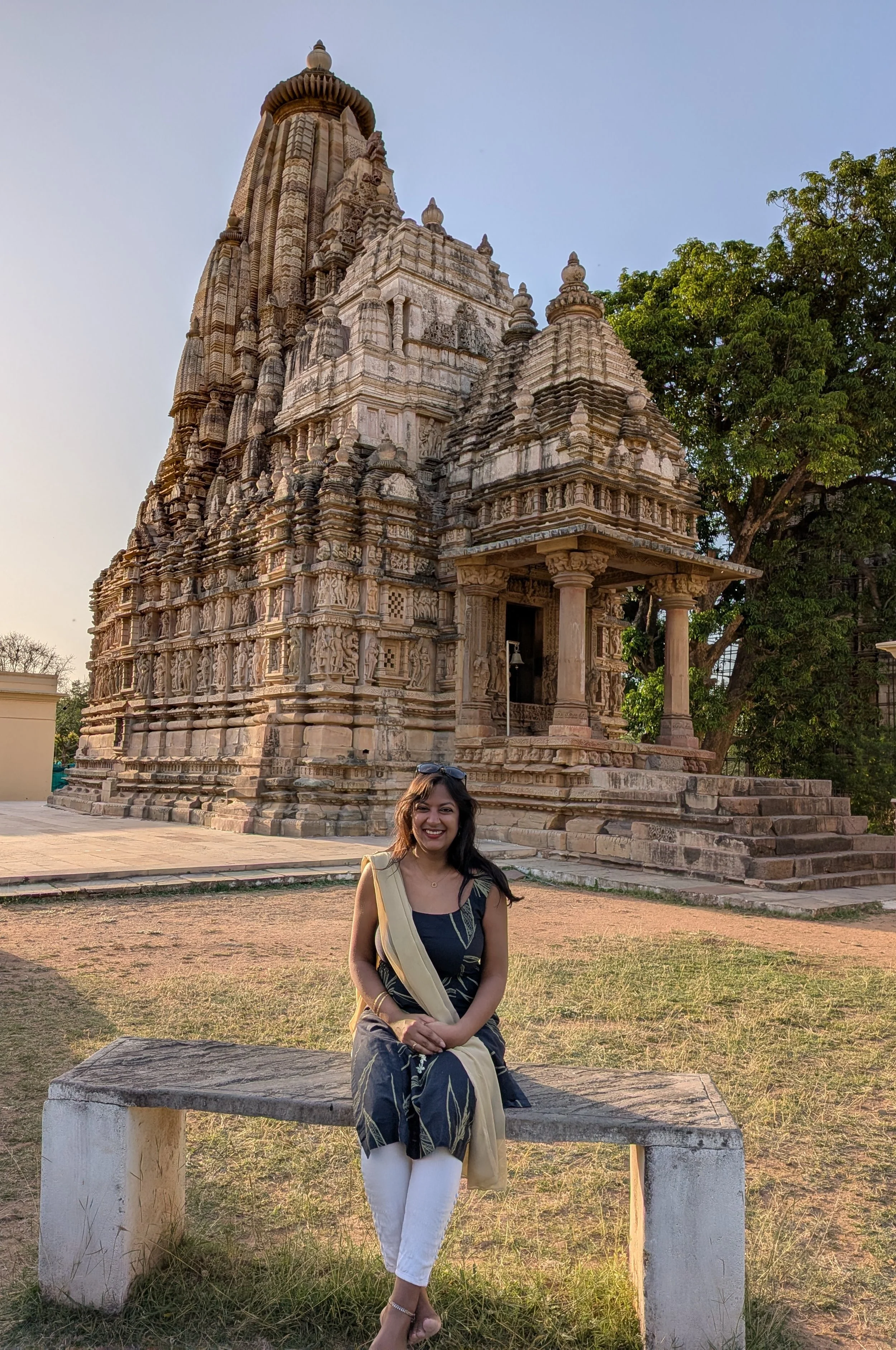
We drink shikanji and fresh coconut water and sugarcane juice. Shikanji makes me think of my nani, who made it for us in the summers, just sugar and lime and cold water. As an adult, I’m supposed to appreciate the sweet sour salty version with kala namak and masala, but I still prefer the sweet version and request it whenever I can. There are street vendors with coconuts and huge knives to slice them open. Mausaji has a container he brings to store the water, before the vendor cuts up the coconut to scoop out the creamy flesh inside, which we take home to Mausi. After sitting in the fridge for an hour, it’s sweet and refreshing. I hadn’t had sugarcane juice before this trip. My first experience was in Khajuraho, where our taxi took us to a little stall with a manual juicer. The man there pushed each piece through multiple times, folding it again and again to make sure every drop of juice got out. He pushed mint and lime through along with it. Many people also take this with masala, but I kept mine sweet. It is much sweeter than the shikanji but absolutely delicious. At home, Mausaji brought ginger to add as well. The electric machines near us are less fun to watch and more crowded, though, and bees swarm around the stalls for a taste.
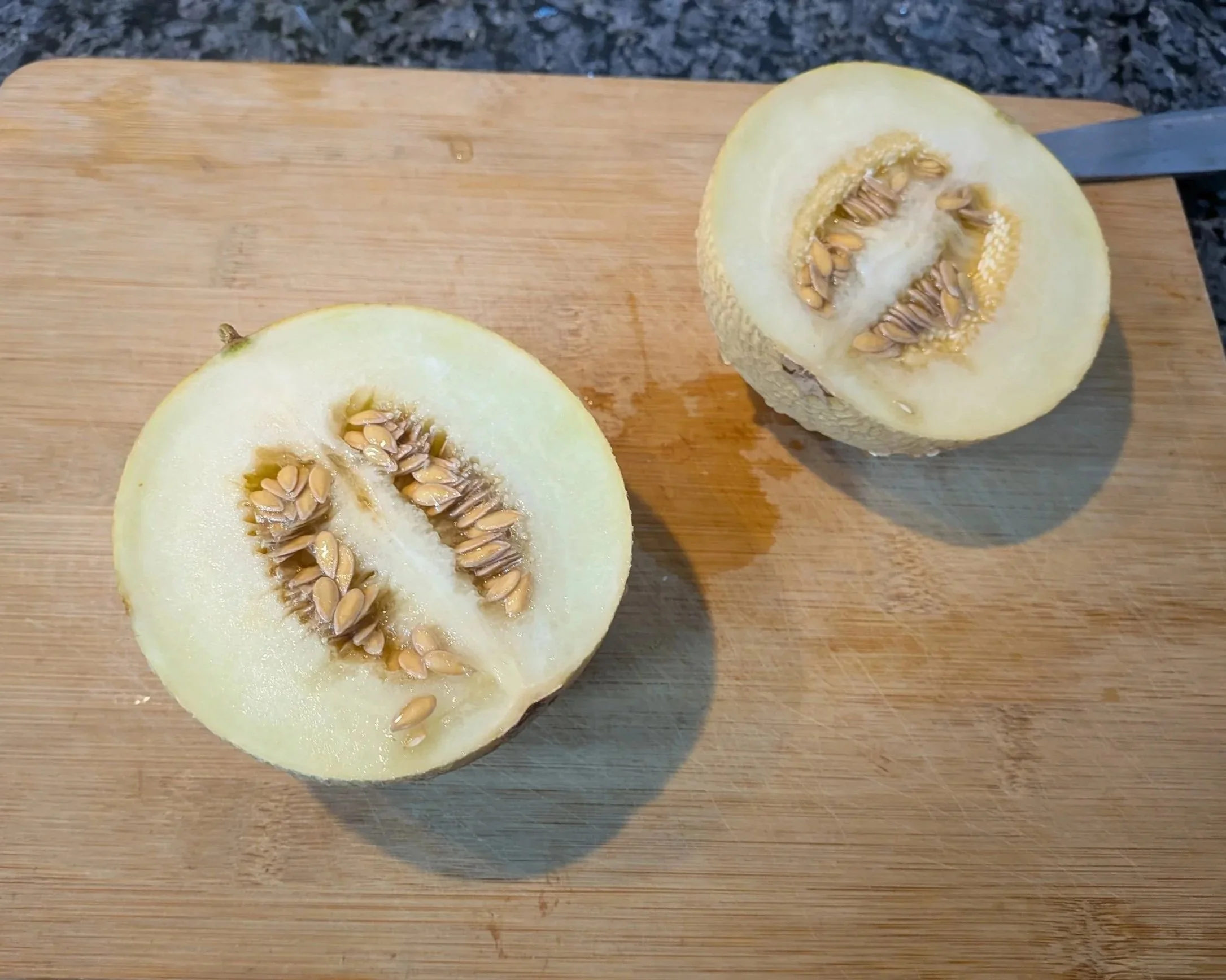
The heat also means mangoes have arrived. Pairi started appearing at the Monday market in late April, a small variety that was sweet. Safeda and Dasheri came soon after, and now there are at least four to five varieties floating around outside. I tried to note down which ones we’ve tried, but I’ve lost track. There is nothing better than a fresh mango, and eating them here makes me remember our summers here. The sweet sour taste, the rich color - it’s so rare to find that back home, since most mangoes that reach New York have been traveling for a while. India exports less than 1% of its mangoes (45-50% of the world’s mangoes) because everyone here is busy eating them (loved learning this). I’m eating more than my quota on this trip to make up for the last twenty years. My cousins and I were talking about doing a mango tasting before I leave - getting all the varieties available and trying them side by side. They’re all delicious but I can’t tell them apart, and I want to be an expert.
Two days ago, it rained and now it’s pleasantly cool - 95 degrees. I’m taking advantage of the weather to get outside and check a few more things off my list. I’m not sure when it will get hot again, and the monsoons are delayed this year, meaning the humidity is not imminent. Here, they call the humidity the ‘chip chip wali garmi’. ‘Chip chip’ means sticky (there’s so much wonderful onomatopoeia in Hindi). We’ll see if the rains arrive before I leave.
pallu: the loose end of the sari, that drapes over your shoulder
dupatta: a long scarf-like piece of material that women wear with kurtas
nani: maternal grandmother
kala namak: pink salt, with a strong taste
masala: spices
garmi: heat
P.S. There’s a podcast called Bad Table Manners from a few years ago which has an excellent episode about India and mangoes (‘The Juice of Mango Cliches’). I recommend a listen if you want to learn more!